Licensed and insured radon pros
Radon Mitigation Omaha NE
Need radon mitigation in Omaha NE? Start with a test. If your number is high, our licensed, insured crew adds a fan system that sends radon outside. Then we test again to prove it works.
Licensed and insuredMany years serving the greater Omaha area
 Action level4.0 pCi/L
Why radon is a real issue in the Omaha area
You cannot see, smell or taste radon. A short test tells you what is in your air. Here is what the public data says about our area.
That is why we install radon mitigation systems in basements, slab homes and crawl spaces. The EPA calls radon the second leading cause of lung cancer, and says to test every home below the third floor (EPA guide). Homes next door to each other can test very differently, so a neighbor's number tells you little about yours.
Radon mitigation services in Omaha NE
Pick the service that fits where you are. If you are not sure, start with a test.
Radon Mitigation System Installation
Sub-slab suction, sump pit sealing and crawl space systems for homes with a test result of 4.0 pCi/L or more.
Radon Testing and Inspection
Short-term tests for homeowners, buyers and sellers, done by the book and explained in plain words.
Continuous Radon Monitoring
An hour-by-hour record of your air, useful for odd results and for checking that a system holds up.
Radon Fan Replacement
Quiet or dead fan? We swap it, check the gauge and confirm the number with a new test.
Commercial Radon Inspection
Offices, schools, child care and apartment buildings, tested to the large-building standard.
Radon Mitigation for Home Sale
A fast fix when an inspection finds a high number and a closing date is coming.
Radon System Inspection
A full check of a radon system that is already in your home, from the gauge to the roof exit.
Looking for the average cost of radon mitigation in Nebraska or a way to compare local radon mitigation companies near you? Start with our cost guide and our page on radon mitigation contractors in Omaha NE.
What the numbers mean
Radon is measured in picocuries per liter, or pCi/L. This is the EPA scale most Omaha home inspection reports use.
Outdoor air has about 0.4 pCi/L. Nebraska homes often test much higher because radon moves up from the soil and collects in closed-up basements, especially in winter. With today's systems, radon in most homes can be brought to 2 pCi/L or below (EPA Consumer's Guide to Radon Reduction).
Got a test result of 4.0 or more?
What EPA Zone 1 means for an Omaha-area home
The EPA sorts every county into one of three radon zones. The zone is a prediction. It is not a test of your house.
| EPA zone | Predicted average indoor level |
|---|---|
| Zone 1 | Above 4 pCi/L |
| Zone 2 | From 2 to 4 pCi/L |
| Zone 3 | Below 2 pCi/L |
Those are the EPA's zone definitions on its Nebraska radon zone map. The same map says it should not decide whether a single home gets tested. The EPA says to test every home, in any zone.
Why 4.0 pCi/L matters
The EPA action level is 4.0 pCi/L. At 4.0 or higher, the EPA says to fix your home. From 2 to 4, it says to think about a fix (EPA Citizen's Guide). State testing data tells the same story for our area. Douglas County averaged 4.8 pCi/L, Sarpy County 5.3 and Cass County 8.0 (Nebraska DHHS county report). The EPA also says levels below 4.0 still carry some risk, so a result of 2 or 3 is worth a second look.
What an average cannot tell you
An average is a group number. Your house has its own soil, its own slab and its own air flow. A home on the same street can read much higher or much lower. The test is the only way to know, and it takes a few days.
How zones and building codes fit in
The EPA made the zone map to help states and cities set radon-resistant building codes (EPA zone map). Nebraska has required radon-resistant features in new buildings since September 1, 2019 (Nebraska DHHS RRNC summary). That rule is about new construction. It does not replace a test in the home you live in now.
What to do next
No test yet? Order one or book a test with us. Already have a number of 4.0 or more? Send it with the form, and we will plan the fix. Between 2 and 4? Talk with us about your options. Read more on our page about radon levels in the Omaha metro by county.
How a radon mitigation job works
- Call or send the form. Share your city, your test number and your foundation type. Tell us if the basement is finished.
- We look at the house. We check the slab, the sump pit, the walls and where a pipe can run without hurting your living space.
- You get a clear written bid. It lists what goes in, where the fan sits and what testing follows.
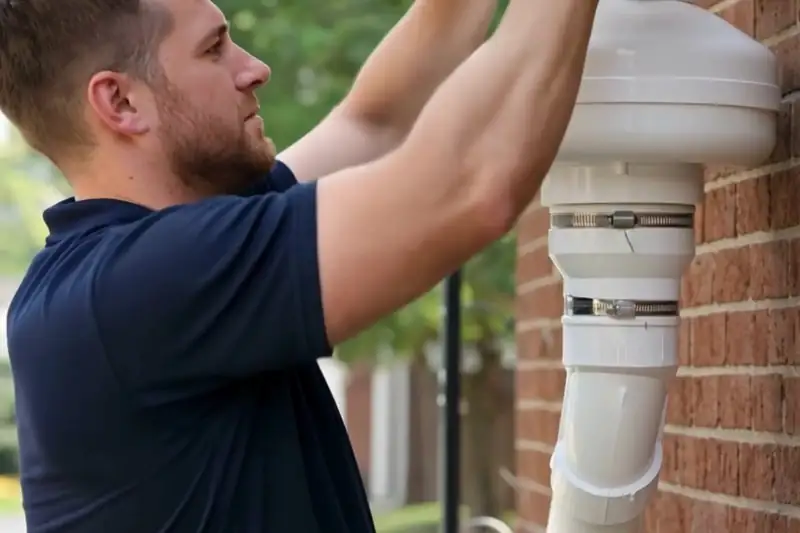
- We install the system. A suction point goes through the slab, a pipe carries the gas out, and the fan sits outside the living space.
- We label it and show you the gauge. You learn how to read the warning device and what the fan should sound like.
- You retest. A test after the fan has run at least 24 hours proves it works.
The fan sits outside the living area, in the attic, garage or outdoors. The pipe must end above the roofline and away from windows. See the Nebraska new-construction rule for the same pipe and labeling basics.
What our customers say
Four notes from homeowners we have worked with around the metro.
We recently discovered elevated radon levels in our home and contacted Omaha Radon Mitigation for help. From the initial conversation through installation, everything was handled professionally. The technician explained the entire process, answered all our questions, and did an excellent job installing the system. Great experience from start to finish!
Excellent service! We had been concerned about radon in our basement and finally decided to have something done about it. Omaha Radon Mitigation made the process incredibly easy. They were punctual, knowledgeable, and very professional. We really appreciated how thoroughly everything was explained.
We couldn't be happier with the service we received. The team was friendly, responsive, and took the time to explain our radon mitigation options. Installation went smoothly, and everything was left clean and organized. It's great working with a company that genuinely cares about its customers!
Very impressed with the overall experience. The technician was friendly, knowledgeable, and respectful of our home. Everything was explained before the work began, and the installation was completed efficiently. Omaha Radon Mitigation made what initially seemed like a complicated process very simple.
Radon mitigation across the Omaha metro
We cover ten main areas and the neighborhoods and towns inside them.
Radon Mitigation in Omaha NE
Downtown Omaha, Midtown, Old Market, Dundee, Benson and more.
Radon Mitigation in West Omaha NE
Millard, Elkhorn, Boys Town, Chalco, Westside and more.
Radon Mitigation in Council Bluffs IA
Twin City, Lewis Central, Iowa School for the Deaf area, Carter Lake, Crescent and more.
Radon Mitigation in Bellevue NE
Offutt AFB, Fontenelle Hills, Avery, Capehart, Bryan High area.
Radon Mitigation in Papillion NE
La Vista, Shadow Lake, Ashbury Creek, Walnut Creek, Portal Ridge.
Radon Mitigation in Gretna NE
Aspen Creek, Tiburon, Lake Wanahoo area, Ashland.
Radon Mitigation in Bennington NE
Washington County line, Newport Landing, Heritage, Prairie View.
Radon Mitigation in North Omaha NE
Florence, Ponca Hills, Minne Lusa, Miller Park, Saratoga.
Radon Mitigation in Fremont NE
Inglewood, Woodcliff, Valley, Waterloo, King Lake.
Radon Mitigation in Plattsmouth NE
Bellevue South, Beaver Lake, Murray, Cass County corridor.
Licensed, insured and local to the Omaha area
We have served the greater Omaha area for many years, and we are licensed and insured. That matters here for a simple reason: radon work is regulated. In Nebraska, anyone who measures or mitigates radon for pay needs a state license. In Iowa, radon mitigation specialists need an Iowa credential, and that rule covers companies from other states that work in Iowa (Iowa Administrative Code 641-44).
Every bid we write names the system type, the fan location and the test that follows. You can read how we choose a system on our page about radon mitigation system installation, and you can see the metro numbers on our county radon levels page.
What you get
- Licensed and insured crew
- Written bid before work starts
- System built for your foundation
- Post-install test explained
- Plain answers, no pressure
What radon mitigation costs in Nebraska
Every home is different, so we quote after we see it. These public numbers give you a range.
| Source | What it says |
|---|---|
| EPA cost analysis, 2025 | Uses about $1,826 for installing a soil depressurization system and $169 for testing, in 2023 dollars. |
| EPA Physician's Guide (archive) | Typical home runs about $500 to $2,500, with an average near $1,200. |
Foundation type, finished walls, pipe length and fan choice move the price. Read more in our radon mitigation cost guide. When you are ready for a number for your house, ask for a quote.
Want a number for your house?
Questions people ask us
Do you offer radon mitigation in Omaha NE and Council Bluffs IA?
Yes. We install radon systems across Omaha, West Omaha, North Omaha, Bellevue, Papillion, Gretna, Bennington, Fremont, Plattsmouth and Council Bluffs, plus the smaller towns around them. See the full service area.
What radon level needs a mitigation system?
The EPA says to fix a home at 4.0 pCi/L or higher and to consider fixing it between 2 and 4 pCi/L (EPA Citizen's Guide). If your test is in that range, we can talk through the next step.
How long does a radon mitigation install take?
Most basement systems are installed in a single visit. Hard jobs, such as a finished basement with a long pipe run or a crawl space, can take longer. We tell you the plan before we start.
Do I need to test again after the system goes in?
Yes. A test after the install proves the system works. The standard sets that test after the fan has run at least 24 hours and within 30 days (ANSI/AARST SGM-SF), and the EPA suggests retesting at least every two years after that (EPA).
Are you licensed and insured?
Yes. Nebraska requires a state license for anyone who tests for or fixes radon for pay (Nebraska DHHS), and Iowa has its own credential for work on the Council Bluffs side. We are licensed and insured, and you can check any radon pro in the state license lookup.
Can sealing cracks fix my radon problem by itself?
Usually not. The EPA does not recommend sealing alone because it has not been shown to lower radon much or reliably (EPA Home Buyer's and Seller's Guide). Sealing helps a fan system work better.
How do I get a quote?
Press the quote button or call. Tell us your city, whether you have a test result, and what kind of foundation you have. We will plan the next step from there.
Ready to lower the radon in your home?
Whether you are in Dundee, Millard, Bellevue or Council Bluffs, we can help. This Omaha radon mitigation home page is your starting point, and our team is a call away at (402) 566-8100.